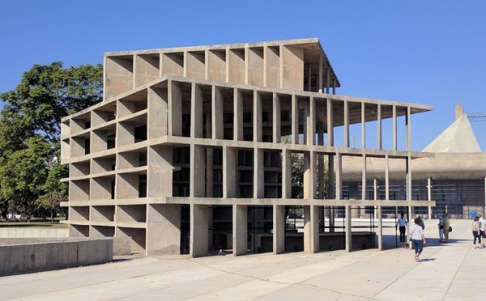

Haryana Legislative Assembly (Haryana Vidhan Sabha)
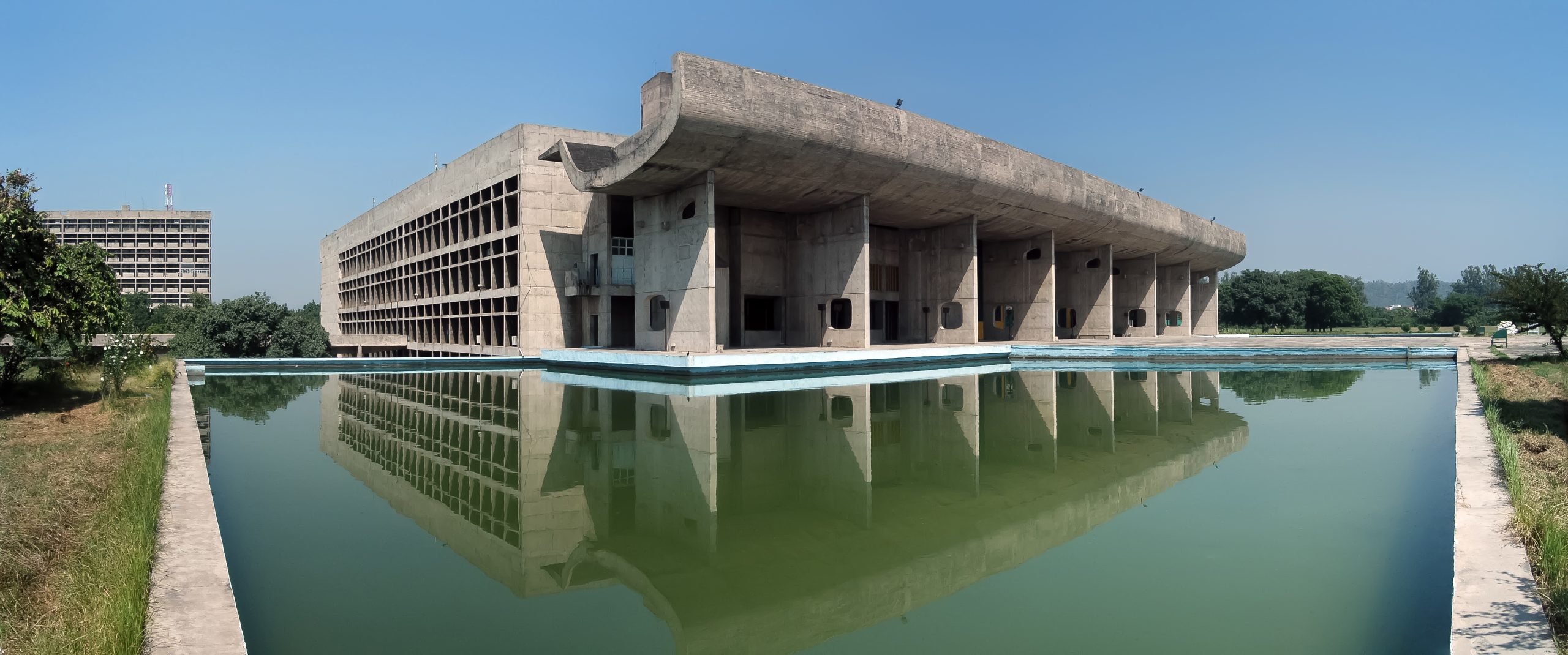 The Haryana Legislative Assembly, also known as the Haryana Vidhan Sabha, stands as a vibrant institution of democratic governance and constitutional authority in the State of Haryana. Functioning from the iconic Vidhan Bhawan in Chandigarh, the Assembly embodies the legislative will of the people and serves as the highest forum for debate, deliberation, and law-making in the state.
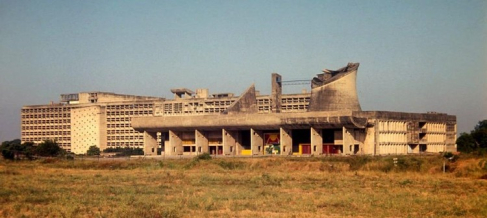
Supported by the Haryana Vidhan Sabha Secretariat, the Assembly ensures the smooth conduct of legislative business, facilitates parliamentary procedures, and provides essential administrative and research assistance to Members of the Legislative Assembly (MLAs). Beyond its institutional role, the Assembly is housed in one of the most architecturally significant buildings in the world—making it not only a center of governance but also a global symbol of modern design and democratic ideals.
Historical Background and Evolution
 The roots of the Haryana Legislative Assembly are deeply intertwined with the broader political history of northern India. From the times of British colonial rule, through India’s independence in 1947, and later the reorganization of states, the region has played a pivotal role in shaping India’s democratic framework.
On 1 November 1966, under the Punjab Reorganisation Act, Haryana emerged as a separate state. The reorganization led to the creation of Haryana as a distinct political entity, while Chandigarh was designated as a Union Territory and joint capital of both Punjab and Haryana.
Before 1966, the Vidhan Bhawan housed the Legislative Assembly and Legislative Council of undivided Punjab, along with various administrative and legislative offices. After reorganization, the building continued to serve both states, with designated areas allocated to each. The chamber previously used by the Punjab Legislative Council was adapted for use by the Haryana Legislative Assembly.
Haryana’s historical and cultural legacy further enriches its legislative identity. The region is often regarded as the cradle of ancient Indian civilization, carries a rich cultural legacy. It is believed to be the land where the Vedas were composed and where the sacred teachings of the Bhagavad Gita were delivered. This historical and cultural depth lends a unique character to the state’s legislative institution, blending tradition with modern governance.
—Genesis of Chandigarh and the Capitol Complex
 The story of the Haryana Legislative Assembly cannot be understood without examining the creation of Chandigarh and its Capitol Complex. Following the partition of India in 1947, the historic city of Lahore, which served as the capital of Punjab, became part of Pakistan. This necessitated the creation of a new capital for Indian Punjab.
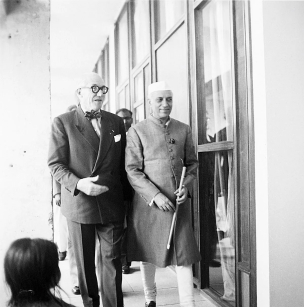
The creation of Chandigarh represents a defining chapter in India’s post-independence history. Envisioned by India’s first Prime Minister, Jawaharlal Nehru as a symbol of nation’s progressive outlook and break free from colonial architectural traditions. He famously described Chandigarh as a city “unfettered by the traditions of the past” and a symbol of India’s faith in the future.
In 1950, American architect Albert Mayer and his colleague Matthew Nowicki were commissioned by Jawaharlal Nehru to design the city. However, after Nowicki’s untimely death in 1950, and Mayer’s withdrawal, the project was reassigned to the legendary Swiss-French architect Le Corbusier in 1951. Along with collaborators such as Pierre Jeanneret, Maxwell Fry, and Jane Drew, Le Corbusier developed a master plan that would redefine urban design in India.
The city was conceptualized as an anthropomorphic form—its Capitol Complex representing the “head,” the commercial district the “heart,” and other sectors forming the “limbs.” The Capitol Complex, located at the northern edge of the city against the backdrop of the Shivalik Hills, was designed as the seat of governance. Today, this complex is recognized as a UNESCO World Heritage Site for its outstanding contribution to modern architecture.
—Le Corbusier: Visionary of Modern Architecture
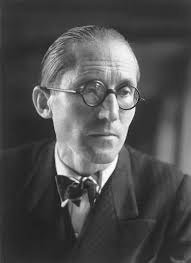
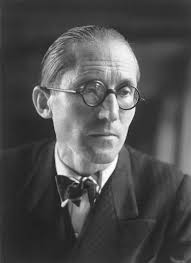 Le Corbusier (1887–1965), born Charles-Édouard Jeanneret, was a pioneering Swiss-French architect, designer, and urban planner. He was one of the most influential architects of the 20th century and a “founding father” of modernist architecture.
A giant of modernism, he introduced functionalist design principles, famously calling houses “machines for living” and developed the famous “Five Points of Architecture,” which include pilotis (columns), free plan, free façade, horizontal windows, and roof gardens. These principles are clearly visible in the design of the Capitol Complex and the Haryana Vidhan Bhawan.
Le Corbusier also developed the “Modulor,” a system of proportions based on human measurements, which he applied extensively in Chandigarh’s design. His work in Chandigarh represents one of his most ambitious and comprehensive urban planning projects.
Le Corbusier’s vision extended beyond individual buildings to the creation of a complete urban environment where architecture, nature, and human activity coexist in balance. In recognition of his contributions, 17 of his projects, including the Capitol Complex, were named as UNESCO World Heritage Sites in 2016.
—The Capitol Complex: A Modernist Masterpiece
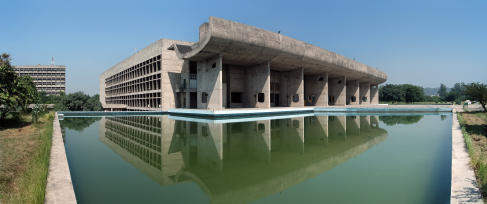
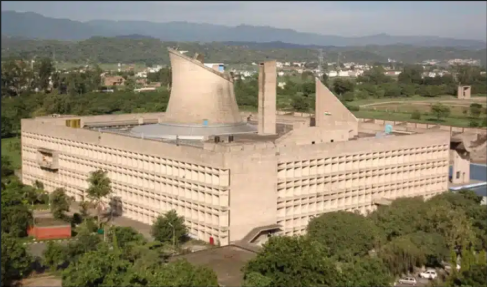
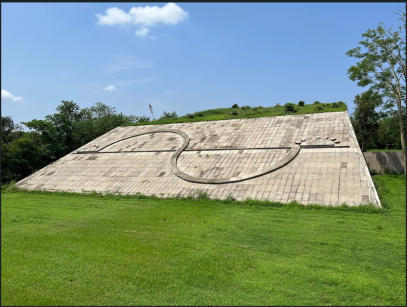
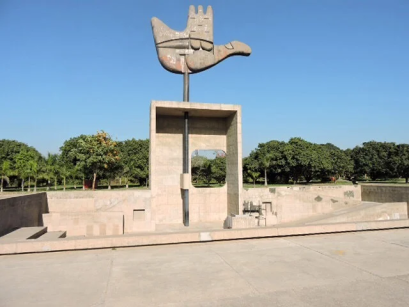
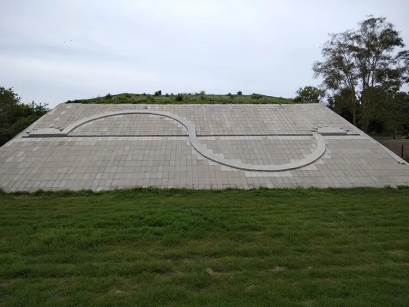
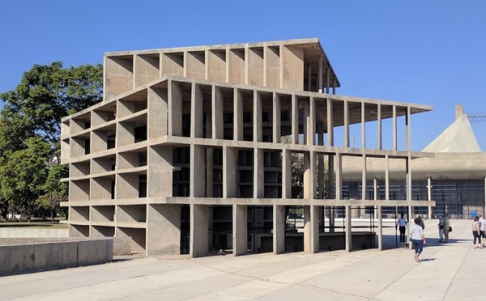
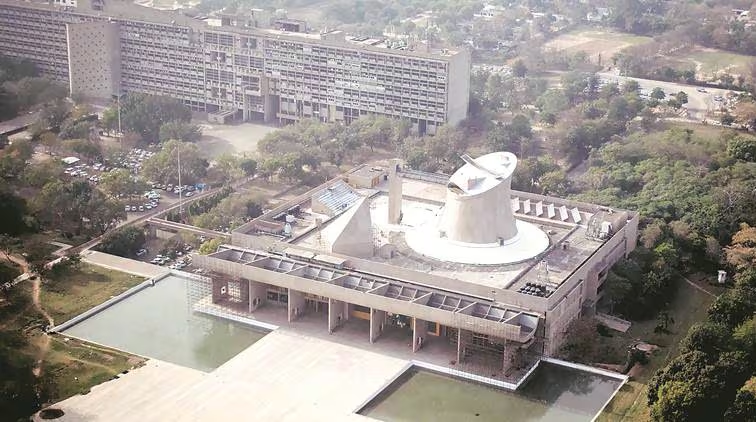 The Capitol Complex stands as a monumental expression of modernist architecture. Spread across a vast expanse, it integrates governance, symbolism, and environmental design into a cohesive whole. It includes three principal structures: The Palace of Assembly, the Secretariat, and the High Court. The complex also features iconic monuments such as the Open Hand Monument, Geometric Hill, Tower of Shadows, and the Martyrs’ Memorial.
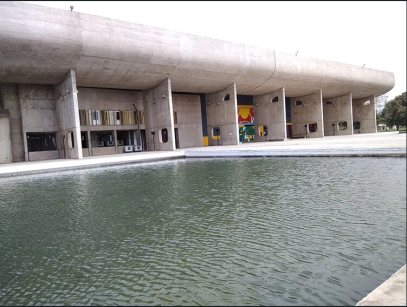
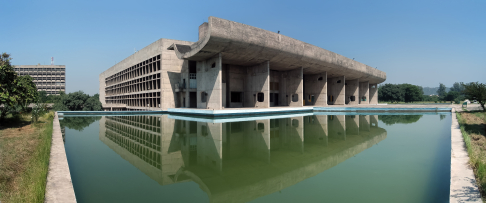
Spread over approximately 100 hectares, the Capitol Complex is a hallmark of modernist architecture, characterized by the use of exposed concrete (béton brut), bold geometric forms, and innovative construction techniques. The buildings incorporate climate-responsive features such as brise-soleil (sun-shading screens), double roofs, and reflecting pools demonstrate an advanced understanding of sustainability.
The design reflects Le Corbusier’s vision of the “Radiant City,” integrating nature, sunlight, and human activity into a cohesive urban environment. The Capitol Complex serves not only as an administrative hub but also as a symbol of India’s transition into a modern, independent nation. It remains one of the most influential architectural ensembles of the 20th century.
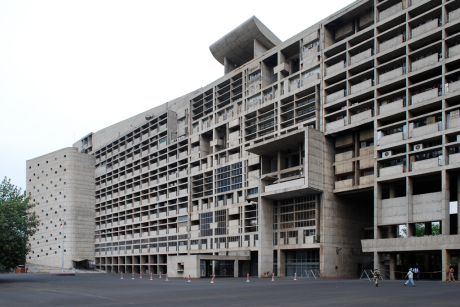
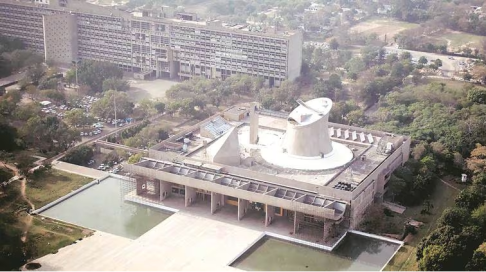
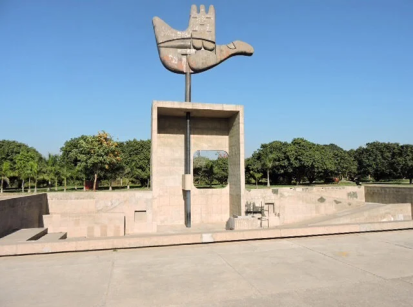
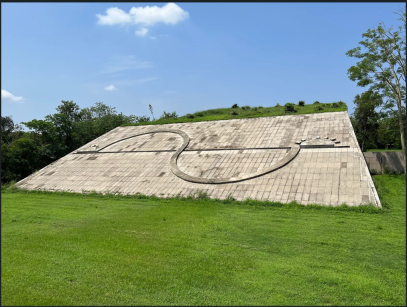
The Palace of Assembly: Architectural and Institutional Significance
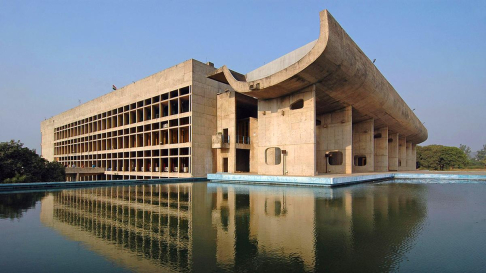
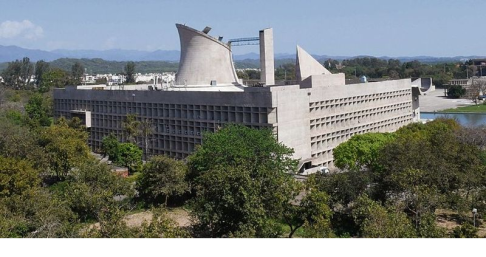
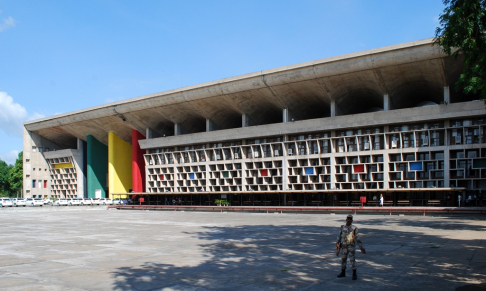
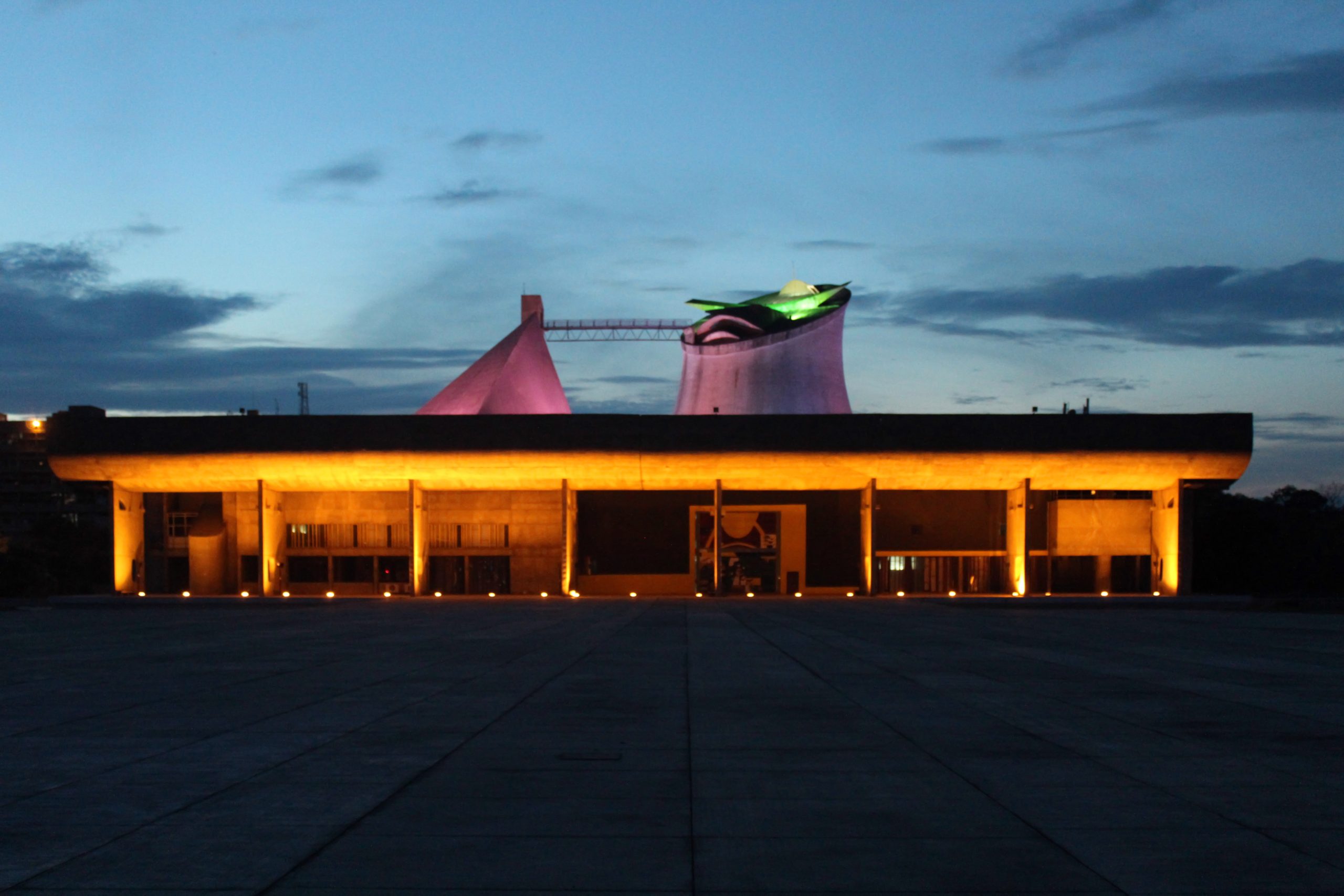 At the heart of the Capitol Complex stands the Palace of Assembly, the most symbolically significant structure, housing both the Haryana and Punjab Legislative Assemblies. Construction began in 1951 and was completed in 1962, with the building officially inaugurated on 15 April 1964.
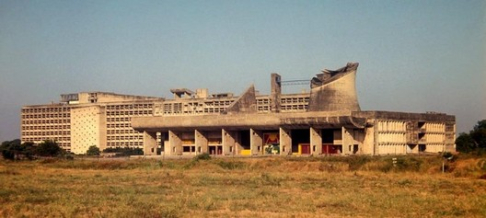
The Palace of Assembly represents the legislative pillar of democracy. Its position between the High Court and the Secretariat reflects the balance between judiciary, executive, and legislature.
The building was conceived as a “palace of the people,” where democratic dialogue and decision-making take place in a setting that inspires dignity, openness, and intellectual exchange.
Architectural Form and Engineering Excellence
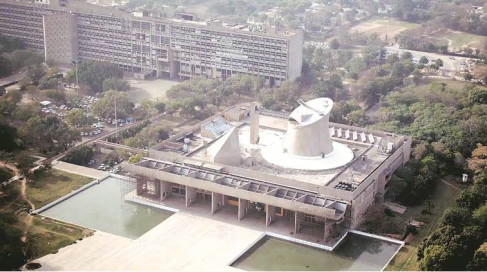
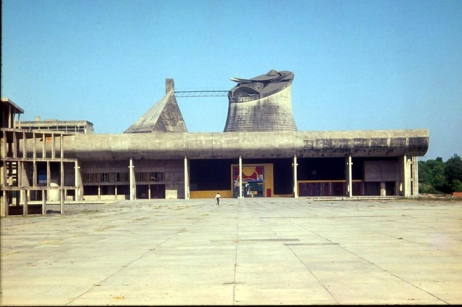
 The 100 m × 100 m structure is square in plan, with spacious chambers, offices and constructed in reinforced concrete, showcasing modernist principles. At its heart lies a central courtyard and the main assembly halls. The structure includes two separate assembly chambers—one for Punjab and one for Haryana.
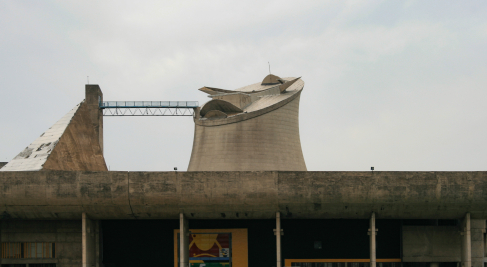
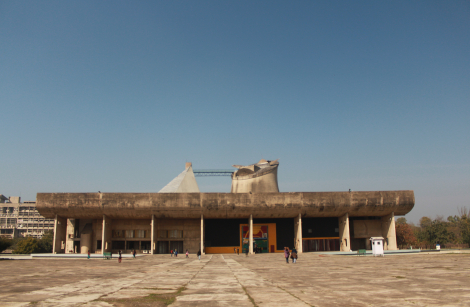
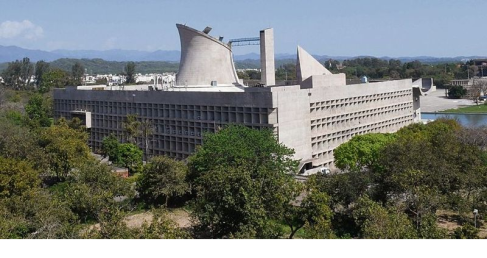
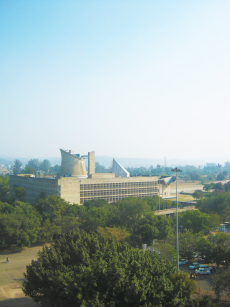
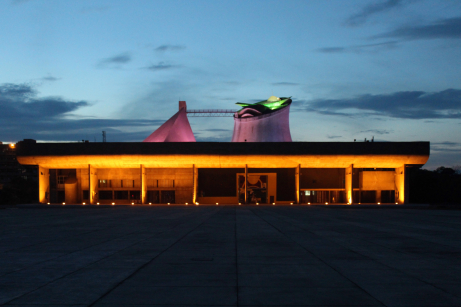
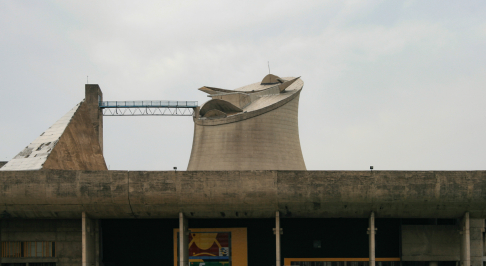
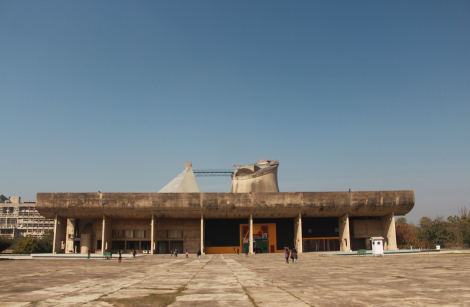
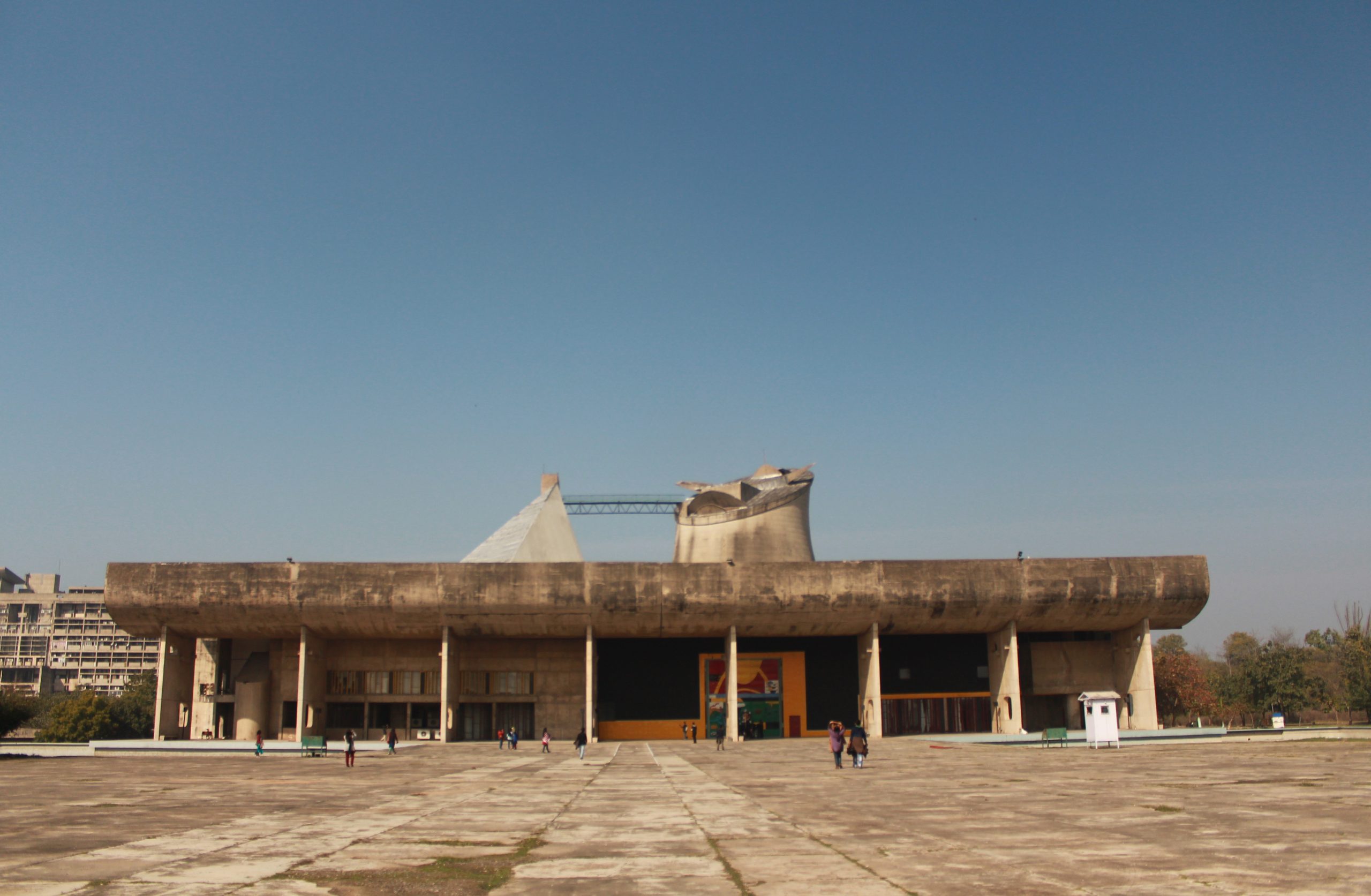
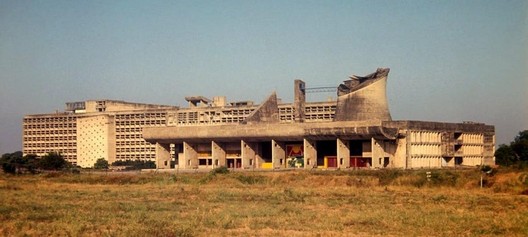
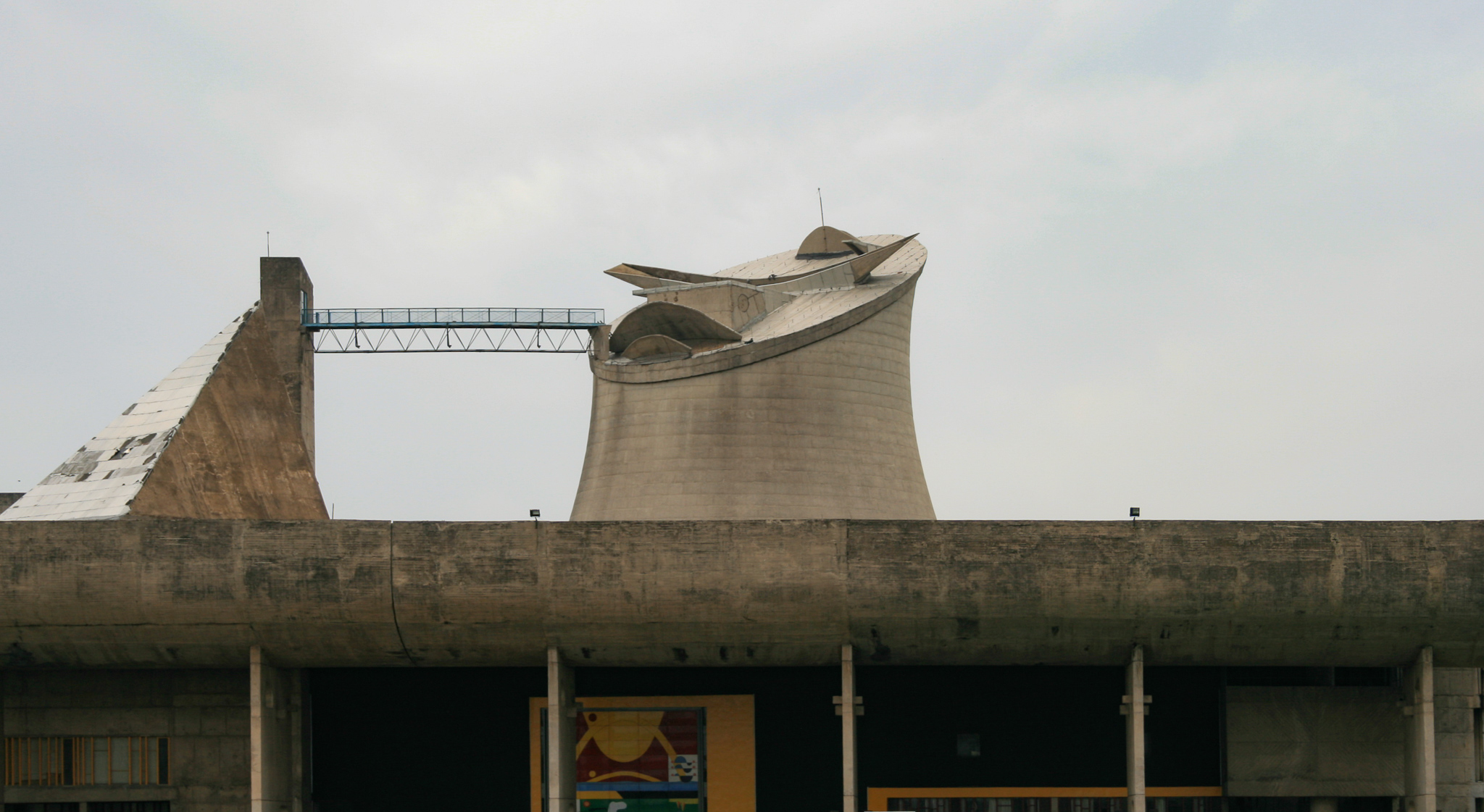
Its iconic hyperbolic shell—housing the Punjab Assembly chamber—was inspired by industrial cooling towers observed by Corbusier in Ahmedabad, while the pyramidal roof defines the Haryana Assembly chamber located in the south-east portion of the building. This engineering marvel creates a vast, column-free interior, enhancing both functionality and visual impact. This open-span design not only amplifies the sense of scale and flexibility within the hall but also reinforces the building’s modernist ethos, where structure, function, and form are seamlessly integrated.
The building also includes a 120-foot-high central tower, which tapers upward, contributing to its distinctive skyline. The building’s bold forms—columns, slabs, and sculptural elements—create a striking visual composition that merges engineering precision with artistic expression.
—Interior Design and Functionality
Le Corbusier believed that “architecture is circulation,” and this philosophy is evident in the building’s design. Ramps replace traditional staircases, ensuring smooth movement and accessibility, while the open plan allows for flexibility in usage.
The assembly hall is circular in form, symbolizing equality and inclusivity, while high ceilings and open spaces create a sense of grandeur and openness essential for democratic functioning. Surrounding galleries for visitors, media, and officials enhance transparency and public participation.
The interiors are designed to maintain optimal environmental conditions, with a centralized air-conditioning system ensuring comfort throughout the year. Acoustic treatments and modern communication systems facilitate effective legislative proceedings.
—Climate-Responsive Design and Sustainability
The building incorporates advanced climate-responsive features, including:
- Brise-soleil for sun control
- Double-roof systems for insulation
- Reflecting pools for cooling
- Centralized air-conditioning for comfort
These elements demonstrate an early integration of sustainability into architectural design, making the structure both functional and environmentally responsive.
—Symbolism and Spatial Expression in Modernist Design
 The Palace of Assembly is defined by a powerful synthesis of symbolism, spatial drama, and artistic expression, most vividly expressed through its ceremonial entrance and interior spatial planning.
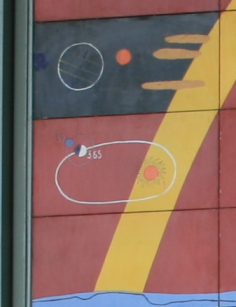
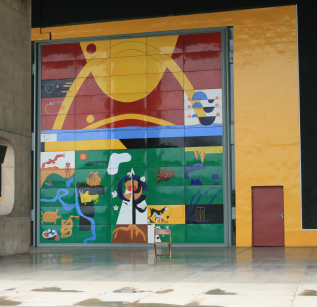
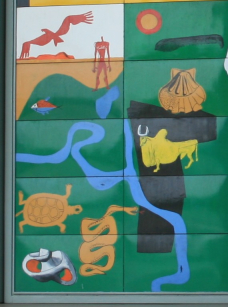
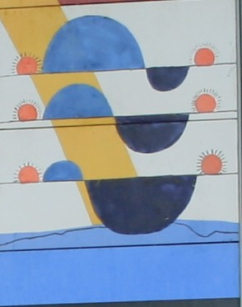
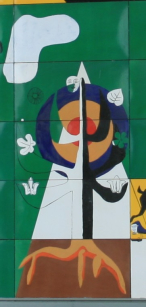
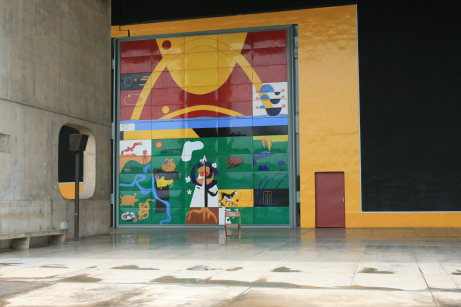
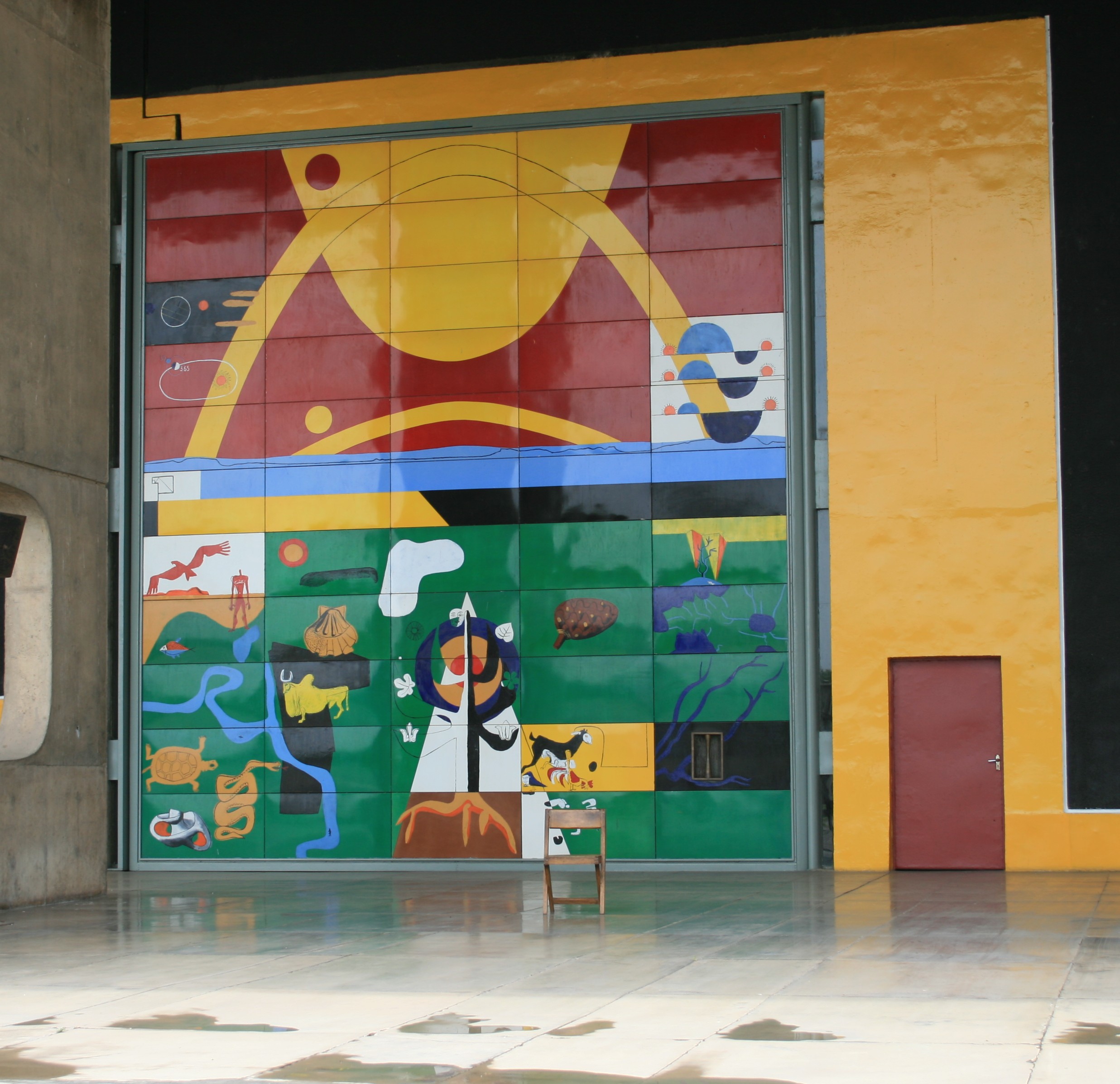
The Palace is distinguished by its monumental ceremonial entrance, marked by a richly enamelled 25-foot square door designed by Le Corbusier. Crafted in France and flown to Chandigarh, the door reflects his direct artistic supervision and was a personal artistic gift to India. Beyond his fame as an architect, Le Corbusier was also a prolific painter and designer, and this hand-painted enamelled entrance highlights that broader creative practice. Gifted by France, the door enhances the building’s ceremonial presence and reinforces its artistic significance.
The door consists of enamelled steel panels and divided into two halves:
- The upper panel depicts cosmic elements such as solstices and eclipses,
- while the lower panel illustrates elements of nature including animals, rivers, and vegetation — symbolizing life on Earth.
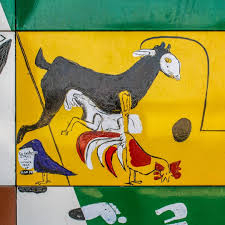
At its center lies the Tree of Knowledge, symbolizing wisdom and enlightenment which are essential to the legislative process. This artistic integration reflects Le Corbusier’s belief in architecture as a synthesis of art, science, and philosophy. In a unique personal touch, the artwork includes caricatures of the planning team. For instance, he depicted his cousin Pierre Jeanneret as a domestic cock and himself as a crow.

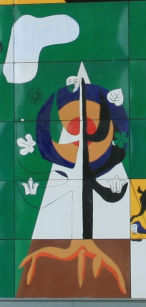
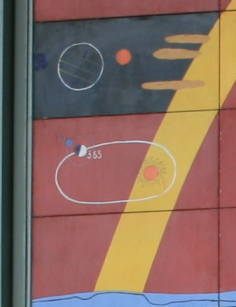
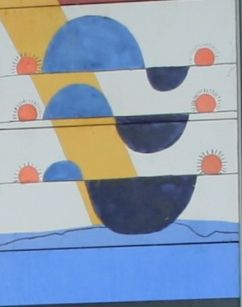
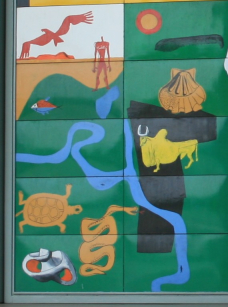
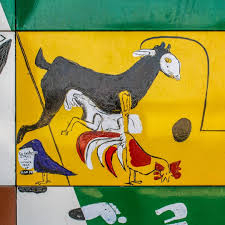
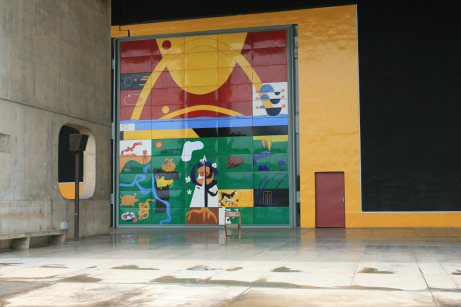
The ceremonial entrance is used during special occasions, such as the Governor’s address, the entrance reinforces both the grandeur and ritual significance of the building.
This symbolic richness extends into the building’s spatial experience and architectural language. At its core lies a vast, dimly lit ceremonial hall known as the “forum,” — a hypostyle hall supported by a grid of slender concrete columns beneath a dark ceiling. Conceived as a “space for favorable encounters,” it enhances interaction and movement within the structure.
The exterior composition further strengthens this narrative, with a dramatic sickle-shaped portico that frames views of the Shivalik Hills while announcing the building’s civic authority. Light plays a crucial role in the design—the truncated top of the hyperboloid is precisely oriented so that the first rays of the sun illuminate the podium at the opening of a legislative session, symbolically marking the beginning of democratic deliberation and intellectual awakening.
—Shared Legacy, Significance and Continuing Relevance
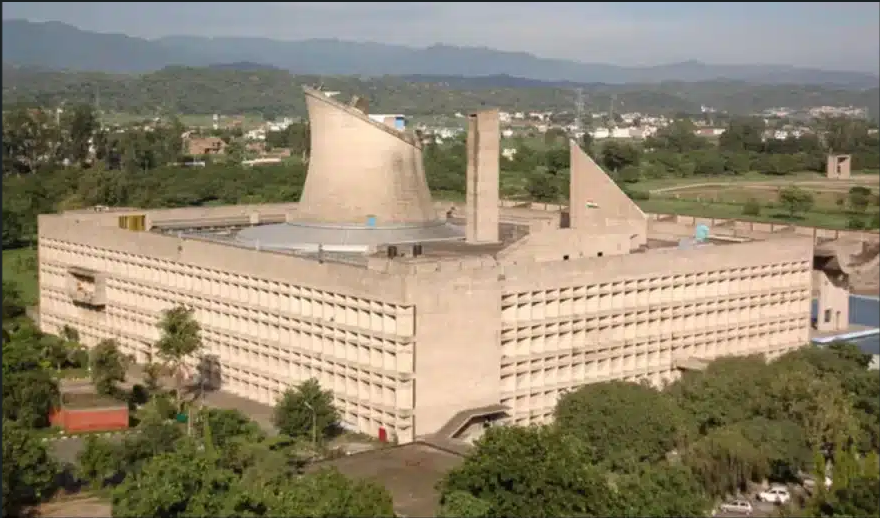 The Haryana Vidhan Sabha operates within a unique shared institutional framework alongside the Punjab Legislative Assembly, both functioning from the iconic Palace of Assembly in Chandigarh. This arrangement, shaped by the reorganization of states in 1966, reflects a rare example of cooperative federalism rooted in shared history and administrative harmony.
The south wing of the building is allocated to Haryana and serves as the nucleus of its legislative functioning. It houses the offices of the Speaker, Chief Minister, Deputy Speaker, and senior officials, along with committee rooms, a library, members’ lounges, and essential administrative units. The Haryana Vidhan Sabha Secretariat ensures the smooth conduct of legislative business, efficient documentation, and procedural coordination.
The building seamlessly balances ceremonial dignity with functional efficiency. The grand ceremonial entrance—featuring the iconic enamelled door is reserved for formal occasions such as the Governor’s address, while the general entrance supports daily legislative operations. This dual-access system reflects both tradition and practicality.
Situated within Chandigarh, the Assembly gains added significance as part of one of the world’s most celebrated planned cities. Envisioned by Jawaharlal Nehru and designed by Le Corbusier, Chandigarh represents a pioneering model of modern urbanism and continues to inspire innovation in architecture and planning.
The city’s grid layout, sector-based planning, and integration of green spaces embody a rational and human-centric approach to urban design. The Capitol Complex, in particular, stands as a global benchmark in modernist architecture, with its bold use of exposed concrete, geometric forms, and climate-responsive features.
In its daily functioning and enduring presence, the Haryana Legislative Assembly continues to uphold the ideals of governance, transparency, and public service, while standing proudly within one of the most remarkable architectural creations of the modern world.